
Partner content
Down Dog: choose home yoga around your time, language and space
Published on
Duration, level and voice are a starting point: what to check in Down Dog, how to prepare your space and what to review before subscribing.
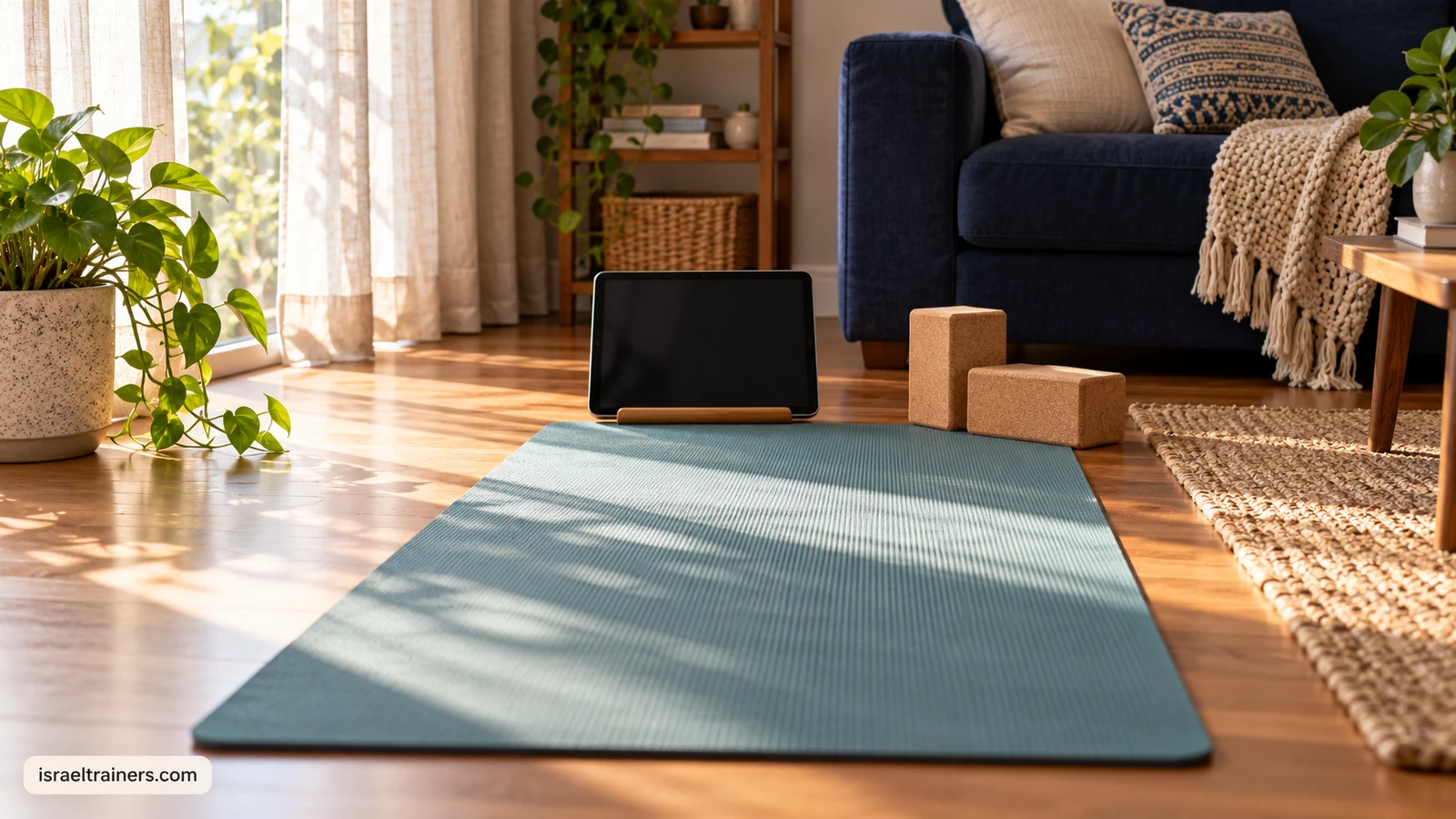
Down Dog starts a home practice with settings rather than a search for one video in a catalogue. According to the company, choices such as duration, level, focus, voice and music shape the session it generates. For someone considering guided yoga at home, the useful question is whether those controls help you reach a suitable session without spending the available time choosing it.
This overview uses the company's website, help information and developer-published app description, without hands-on testing. It examines how to choose and prepare to use the service, rather than prescribing a personal practice. The potential appeal is control over the session's format, provided you know which choices matter to you.
Begin with the time you actually have
Choosing a practice length is central to Down Dog's offer. Before setting the duration, allow for getting the mat out, moving furniture, positioning a screen and finishing without immediately rushing elsewhere. An empty calendar slot is not always the same as uninterrupted time to follow instructions.
Choose a realistic opportunity to check how the service fits. If you spend the session moving between rooms or looking for equipment, the first change may be to the room rather than the duration. This is not a recommendation for a particular practice length or frequency. It is a way to assess whether the setup works in your ordinary routine, rather than only on an unusually quiet day.
Separate style from level
The developer describes several yoga styles, including Vinyasa, Yin and Restorative, alongside level settings. Those are different choices. A style describes the kind of practice offered, while a level forms part of the session configuration. You do not need to choose something different every time to make use of the service.
If a menu term is unfamiliar, find out what it means before starting. Note which instructions are clear and which leave questions you would like to ask a suitable teacher. A selection on a screen is not an individual assessment of your movement. Where personal adaptation is needed, discuss it with a professional who knows your circumstances instead of inferring suitability from a class name.
Treat voice and language as practical features
The company offers voice and music choices, and its help centre describes adjusting the amount of instruction for some practice types. Check whether you understand the cues without looking continuously at the display. A preferred voice may simply be one whose pace and pronunciation you find easier to follow.
The developer's published list of yoga practice languages includes English and French; Hebrew was not listed in the information checked. That matters for readers in Israel. A Hebrew store page does not establish that spoken guidance is available in Hebrew. If using another language you know, consider your understanding of movement vocabulary as well as the general description of the service.
Prepare the room before refining the settings
A consistent position for the mat and screen can make starting more straightforward. Check that the device is stable, the audio is clear and the space you have chosen is not simultaneously needed for a doorway or household traffic. You do not need to reproduce a studio to assess whether the guidance works for you at home.
Think about how you will see demonstrations when your position changes. If you keep moving the phone, pause and rearrange the setup. This is a usability check, not an instruction to perform a particular pose. For individual guidance, you can start with the trainer directory and ask specifically about relevant qualifications and teaching arrangements. Do not assume every listed professional teaches yoga.
Check the experience away from home
Down Dog advertises downloadable practices for offline use in its mobile apps, alongside access through a browser. Its help centre distinguishes those options: downloading for offline playback is not a browser feature. If offline access is a main reason for choosing the service, check it on the device you intend to use.
Before travelling, confirm that the practice you want is available and that you know how to open it under the expected conditions. Check the audio too, rather than assuming every option behaves exactly as it does online. This preparation can be useful in a guest room or another temporary setting, but the room itself still needs a separate assessment for the activity you have chosen.
Read the offer where you intend to buy
Before paying, visit the official Down Dog website (opens in a new tab) and check what the relevant offer includes. Compare the billing period, currency, renewal and subscription management route. This article does not set an Israeli price or assume that a promotion in one purchasing channel applies in another.
The Down Dog FAQ explains that subscription management depends on whether you purchased through the company's website or an app store. Keep the purchase details and the account you used so you can find the appropriate place to review billing and renewal. A longer subscription should follow a decision that the service suits you, rather than simply an attractive price per month.
Make the decision after a session
After trying the service, ask whether choosing a session was straightforward, the guidance was understandable and the room setup was workable. If something did not fit, identify whether it concerned a setting, the language, the environment or a need for individual teaching. Each calls for a different response.
Down Dog may appeal to people who prefer guided home practice with control over its format. You do not need to use every practice type or setting. A more useful measure is whether you can return knowing what you selected, what worked for you and what still needs clarification.
More partner articles

Partner content
Strava: record outdoor activity and choose what you share
Activity recording, routes and clubs, with a clear look at the privacy settings to check before making Strava part of your routine.
Partner content
Hevy: how to keep a strength-training log you can use next time
Routines, previous values and useful notes: how to assess Hevy as a workout log and decide whether its paid features meet a real need.