
The Mediterranean diet in practice: evidence, shopping and meals that suit you
Published on
What the Ministry of Health dietary pattern includes, what research can tell us, and how to turn principles into shopping and meals without compulsory products.
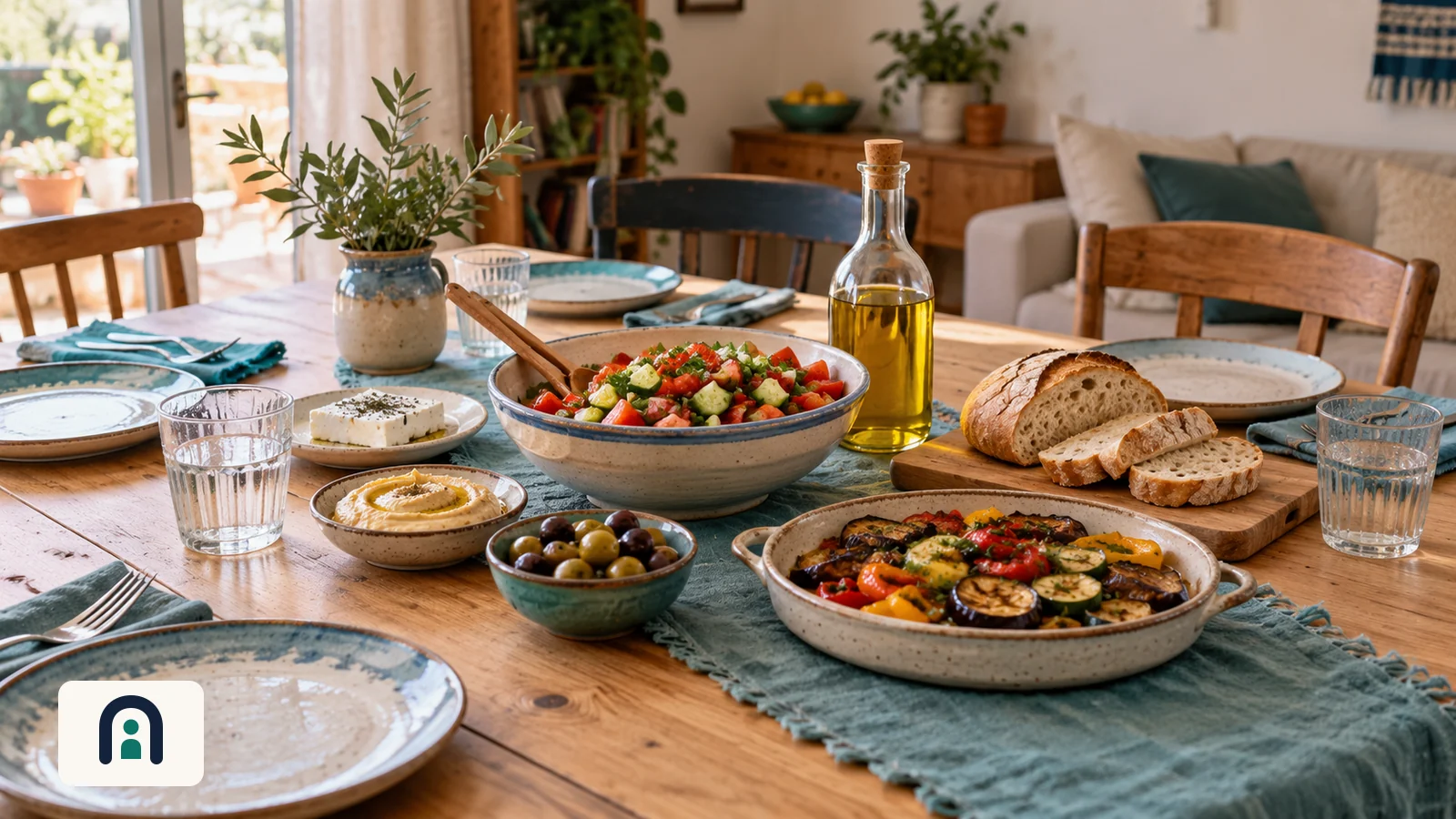
The Mediterranean diet is an eating pattern, not a compulsory shopping list or an identical menu for everyone. Israeli Ministry of Health guidance includes varied vegetables and fruit, wholegrains, pulses, plant fats and other foods, alongside water and a preference for home-prepared, minimally processed food. The overall pattern matters.
Start with your existing kitchen and budget. You need not buy an expensive product because it says Mediterranean, and no single food guarantees the benefits associated with the pattern. Applying the idea means separating general dietary guidance, research findings and individual meal adaptation.
What sits at the centre of the pattern?
The Ministry of Health describes varied plant foods, wholegrains and pulses, alongside animal-food options in accordance with its guidance. The picture extends beyond olive oil or salad to food choices, processing, drinks and how eating is organised.
Lentils or beans might feature in a home-cooked stew, and vegetables in several forms through the day. These are applications, not a menu or a requirement that every meal contain identical items. A dietitian can adapt the principles to your preferences, traditions and health.
Variety does not require a crowded table at every meal. Consider habits over time rather than whether one meal includes every food group. Expecting a perfect plate each time may distract from a practical change in shopping, preparation or accessible food.
What evidence says and what it does not promise
Mediterranean diet research includes different study types. Observational research can identify associations but cannot alone prove the pattern caused an outcome. Randomised trials also differ in populations, interventions and outcomes. They should not all be converted into one health promise.
A Cochrane review of cardiovascular disease prevention found uneven certainty across outcomes and comparisons, with limitations and differences between studies in some areas. PREDIMED was also reanalysed and republished following allocation problems at some sites, a relevant detail when assessing the evidence.
This does not make guidance worthless; it means presenting it within its limits. A recommended eating pattern cannot guarantee freedom from disease or replace required treatment and monitoring. General principles can be adopted without attributing unproven medical properties to a single food.
Start with shopping that leads to feasible meals
Before replacing your entire shopping list, consider your usual meals. Do you buy something with good intentions that goes uneaten? Is an ingredient missing that would make a simple meal possible on a busy day? These questions may help more than a long list of new products.
Choose a defined change if useful: keeping pulses that suit your cooking, including a wholegrain you enjoy or planning vegetables that will be accessible at mealtimes. These are organisational options, not compulsory targets. Medical restrictions, sensitivities or significant food-related difficulties require appropriate advice when changing things.
Consider purchased quantities and safe use of leftovers too. Buying extensive variety has little practical value if it does not fit your routine. Planning around meals and household members can turn a principle into a repeatable choice without centring a particular product.
Pulses and wholegrains need not require complicated recipes
Pulses appear in the guidance as plant-food sources. They can feature in soups, stews, spreads or salads according to preference. This does not prescribe uniform quantities or imply all pulse-based products are alike. For packaged products, examine the label and ingredients.
With wholegrains too, front-of-pack wording is incomplete information. Check ingredients and preparation, and compare products intended for the same use. The guide to Israeli food labels explains how to read symbols alongside the nutrition table and reference unit.
If a food is disliked at home, explore alternatives rather than making it essential to success. Adaptation does not mean recreating a photographed plate. It means understanding the principles and finding how they fit your kitchen, with variety and a workable routine.
Choose protein and fat sources within the overall pattern
The pattern contains varied sources. It neither requires vegetarianism nor obliges you to eat every animal food. Ministry of Health guidance presents options across the week. Preferences, traditions and health may influence choices and the need for professional adaptation.
The guide to protein and food sources separates a reference value from an individual target. That distinction applies here: a broad nutritional category does not determine everyone's protein need or suitable foods. Do not turn an eating pattern into a calculator that ignores the person.
Plant fats likewise do not remove the context of the meal. This guide gives no individual amount for oil, tahini or nuts and does not recommend starting alcohol consumption as part of the pattern. A feature sometimes mentioned in traditional descriptions is no reason to add an unnecessary habit.
Budget, work and eating away from home
Implementation need not start with premium ingredients. Consider availability, what is actually eaten and preparation time. Compare prices by real use, not a healthy image. No source requires a particular brand for a meal to belong to a Mediterranean pattern.
For a working day, consider a meal you can store and bring, or an available choice where you are. Before suggesting solutions, establish whether there is a fridge, reheating equipment or time for a break. Advice ignoring these conditions does not become useful because its ingredients match guidance.
When eating out, examine the actual offer. Mediterranean dish does not specify ingredients or nutritional values. Ask what is included and choose according to needs and preferences. A non-home meal need not be treated as breaking a plan, nor assumed equivalent to a home meal because of its title.
Choose a change you can assess over time
Select one thing to organise differently and define how you will know it is practical. Could one prepared component serve several meals, or could an alternative be available when you do not cook? These are planning examples, not treatment programmes or proof of medical outcomes.
If the change does not fit, investigate taste, time, cost or storage conditions. Do not immediately conclude you cannot maintain habits. Sometimes the idea needs a simple adjustment; sometimes support is needed to understand the difficulty. Adaptability belongs within planning, not as a reason to replace the entire pattern each week.
Use the nutrition professionals directory to find support and check qualifications. Bring everyday examples and ask how guidance can translate to your circumstances. You need not arrive with another source's forbidden-food list or a commitment to one product.
Read guidance, then return to your own kitchen
The Ministry of Health dietary guidance (opens in a new tab) provides a general framework. It does not adapt individually to medical conditions or dictate every meal. Where nutritional treatment is needed, discuss applying the principles within the appropriate professional setting.
Imagine a family changes one regularly prepared evening meal. Instead of adding a branded product, they consider ingredients suited to their tastes and time. This illustration does not claim a particular meal prevents disease; it shows how a broad principle becomes a feasible choice.
The practical difference is between adopting an image of a diet and understanding its pattern. An image can look right without fitting you. Understanding lets you choose alternatives, account for budget and recognise when advice is needed. That leaves room for both guidance and the lives meals belong to.
Where several people shop and cook, discuss responsibilities. Who knows what is missing, chooses meals and handles days without cooking time? A change agreed with only one person can be hard to implement if meals are decided elsewhere. This concerns shared planning, not one menu for everyone.
Agree familiar options for different circumstances without calling them perfect. One choice may fit a day with cooking time and another a busy day. General guidance can support discussion, but individual needs remain relevant; a family decision should not become treatment for everyone.
If someone has medical dietary instructions, do not assume every example here suits them. Ask their professional how to combine those instructions with shared meals. This preserves practicality and suitability without presenting one food as a solution to every situation.
General information cannot replace diagnosis, medical advice or individual fitness and nutrition guidance. Consult a qualified professional for medical conditions or symptoms.
Further reading
Long-term weight management: individual needs, habits and when to seek help
Assess weight-management support without rapid-change promises, discuss practical habits and recognise when food or weight concerns need professional help.

Reading Israeli food labels: red and green symbols beyond the headline
Understand red and green food symbols, compare per-100-gram and serving values, and read ingredients, allergens and marketing claims separately.

What to eat before and after exercise: activity type, timing and digestive comfort
Consider activity type, your previous meal, digestive comfort and daily routine when planning food around exercise and deciding when to seek advice.