
How much protein do you need each day? Reference values, food sources and individual needs
Published on
What the reference value for healthy adults means, why it is not an individual target, and how to assess protein foods and products beyond a prominent number.
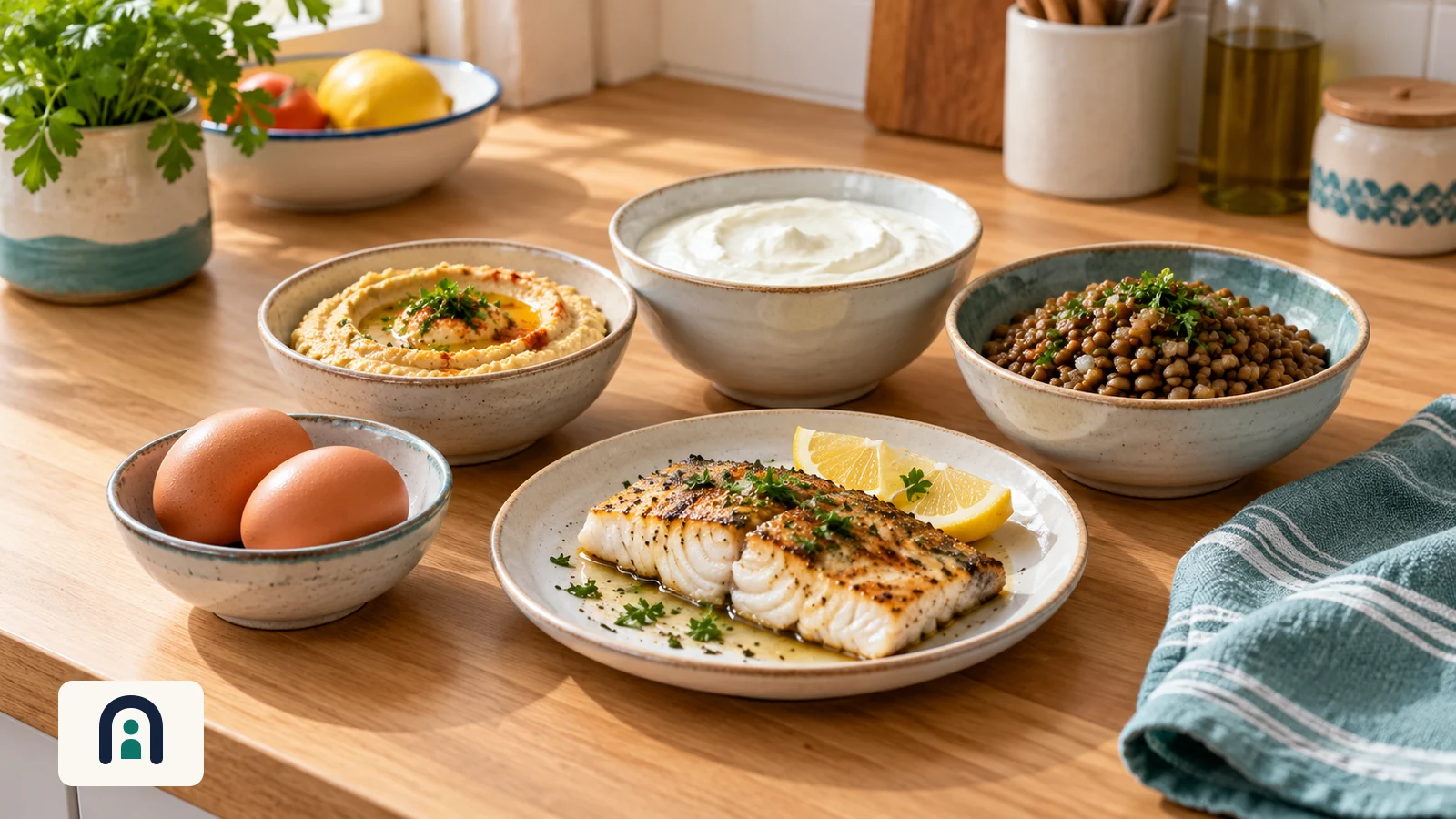
No single daily protein amount suits every adult. A common reference for healthy adults is the US Recommended Dietary Allowance, or RDA, of 0.8 grams per kilogram of body weight per day. This is a population reference value, not a personal target established by multiplication alone, or an instruction suitable for every age, activity level or medical condition.
The distinction between a general figure and individual adaptation matters more than finding the one food with the most protein. Practical questions concern what you eat throughout the day, which sources suit you and why you are investigating. Exercise, age, preferences and health may change the discussion, so first understand what the recommendation does and does not mean.
A reference value is not an eating plan
Dietary reference values support planning and assessment for healthy populations. The recommended allowance concerns the needs of most people in its reference group. It is neither an upper safety limit nor an individual measurement of your requirement. A different value describing average requirements is not an alternative you can choose merely because it is lower.
A perspective paper on protein and ageing (opens in a new tab) explains the adult reference value and debate about whether higher intake is appropriate in older age. This research discussion does not establish that everyone should adopt a higher target. The authors also identify the need for further long-term evidence.
This guide therefore provides no calculator producing an eating prescription from weight alone. Such a figure can appear precise while important information is missing. For a personal target, consult a dietitian with information about your health, activity and current diet rather than relying on a number beside a product or in an app.
Exercise does not put everyone in the same population
Occasional recreational activity, a regular training routine and competitive sport differ. Advice written for athletes under particular training conditions does not automatically apply to beginners. Even within one setting, training programmes and eating habits may vary.
If a trainer proposes a nutritional target, ask what need supports it and what relevant qualifications they hold. Fitness training and dietetics licensing are different fields. The guide to nutrition qualifications explains how to check rather than infer this from a package name.
Separate quantity from timing too. Buying a product after exercise does not itself address your intake throughout the day. The guide to eating before and after exercise explains why activity type, the previous meal and comfort matter, alongside time elapsed since training.
Avoid generalising in older age or with a medical condition
The Ministry of Health emphasises protein sources as part of nutrition in older age. Research also discusses maintaining muscle and changing needs with age. This does not mean every older person needs the same addition or that every high-protein product suits them.
With kidney disease, another medical condition, reduced appetite or existing dietary instructions, do not change intake according to an internet rule. Discuss suitable eating with your healthcare team and a dietitian. Blanket instructions to increase or reduce intake can both be inappropriate without personal information.
If helping a relative, describe the actual difficulty: shopping, preparation, chewing, preferences or mealtimes. These details support professional assessment. There is no need to buy a supplement before establishing the problem and purpose of intervention. The food source and format should suit the person, not merely display a high number.
Familiar sources in an Israeli kitchen
The Ministry of Health describes animal and plant protein sources. Familiar options include eggs, dairy products, fish, poultry, pulses and soy products. You need not choose one source for every meal. Taste, budget, kashrut, availability and preferences can inform the choice, alongside professional adaptation where needed.
For example, pulses can feature in soup, stew or salad, and tofu in a hot meal. A dairy product may suit someone who consumes dairy, while an egg can form part of a home meal. These are food examples, not a menu or a claim that they meet an individual's entire daily requirement.
Foods commonly associated with protein do not all have the same composition. Products within a group differ too. This guide therefore avoids a table of rounded values detached from brand, quantity and preparation. Calculating protein in a packaged product requires its own data and reference unit.
Why preparation changes the comparison
A figure per 100 grams is insufficient without knowing what it describes. Dry and cooked foods are not equivalent comparison units, and a cup-sized serving is not necessarily identical between sources. Copying a number without context can misrepresent the amount actually consumed.
Check whether packaged-food values concern the product as sold or after preparation, and identify the stated serving. If information is unclear, do not guess. It can support cautious comparison between similar products without becoming a more precise individual measurement than it really is.
The guide to reading food labels distinguishes per-100-gram values from servings. That distinction matters here: a product may appear protein-rich per reference unit while the amount you choose differs. Do not base a nutritional decision on a number detached from the rest of the meal.
Fortified products and supplements are not automatic choices
High-protein wording is one piece of product information. Check the label, ingredients, price and how the product fits your eating. A prominent number on the front does not establish that it suits you better than another food.
If considering a supplement, ask what need it would meet, whether ordinary food could meet it and whether medical circumstances matter. This guide recommends no supplement brand, amount or timing. If receiving a professional recommendation, request an explanation of its purpose and how suitability is checked.
Cost belongs in the discussion. Compare the package price with what you actually use without assuming an expensive or fortified product is essential. A protein conversation can start with existing foods and preferences, not a shopping list decided before your current diet is considered.
Preparing for an individual consultation
Gather an account of ordinary meals, activity and why the question arose. Are you trying to understand advice, struggling to include particular foods or reviewing a change in age or training? This helps the dietitian understand your question without starting from an arbitrary number.
You do not need perfect calculations of every gram. Bring a product label if useful for clarifying its reference unit. Mention relevant medical instructions. Share medical information within the professional setting, not through a public directory form.
For support, approach your health fund or consult the nutrition professionals directory. Check qualifications and areas of work, and establish what the consultation includes. The desired outcome is not necessarily a higher number, but understanding your need and an appropriate way to meet it.
An example that starts with the right question
Suppose you compare two yoghurts, one prominently advertising protein and one without that wording. This is a consumer example only. Compare values using the same weight unit, check pack size and the other information, and ask whether you need to change your usual product at all.
The same principle applies to a friend's recommendation: establish whom it was intended for and why before copying it. Nutrition does not become individualised because a calculation is precise to one decimal place. Adaptation requires information about the person and context. A reference value helps explain the discussion; it does not end it.
With vegetarian or vegan eating, begin with existing food sources and discuss the overall pattern with a dietitian. Do not assume every plant product has the same composition or that vegan wording establishes protein content. Examine the particular food, its use and its suitability for your needs.
If household members eat differently, ask about planning meals with shared ingredients and alternatives without transferring one person's advice to another. This is an organisational question, not an instruction that everyone needs identical portions or sources.
If keeping a food record for an appointment, describe an ordinary routine rather than a day specially changed for assessment. That shows what is available, eaten and difficult to include. The dietitian can determine what further information is needed instead of you completing calculations that omit relevant factors.
General information cannot replace diagnosis, medical advice or individual fitness and nutrition guidance. Consult a qualified professional for medical conditions or symptoms.
Further reading
Long-term weight management: individual needs, habits and when to seek help
Assess weight-management support without rapid-change promises, discuss practical habits and recognise when food or weight concerns need professional help.

Reading Israeli food labels: red and green symbols beyond the headline
Understand red and green food symbols, compare per-100-gram and serving values, and read ingredients, allergens and marketing claims separately.

What to eat before and after exercise: activity type, timing and digestive comfort
Consider activity type, your previous meal, digestive comfort and daily routine when planning food around exercise and deciding when to seek advice.