
Exercise during pregnancy and after birth: guidance, adaptations and warning signs
Published on
What general guidance says, why pregnancy and recovery require adaptation, and what to ask before choosing an exercise setting.
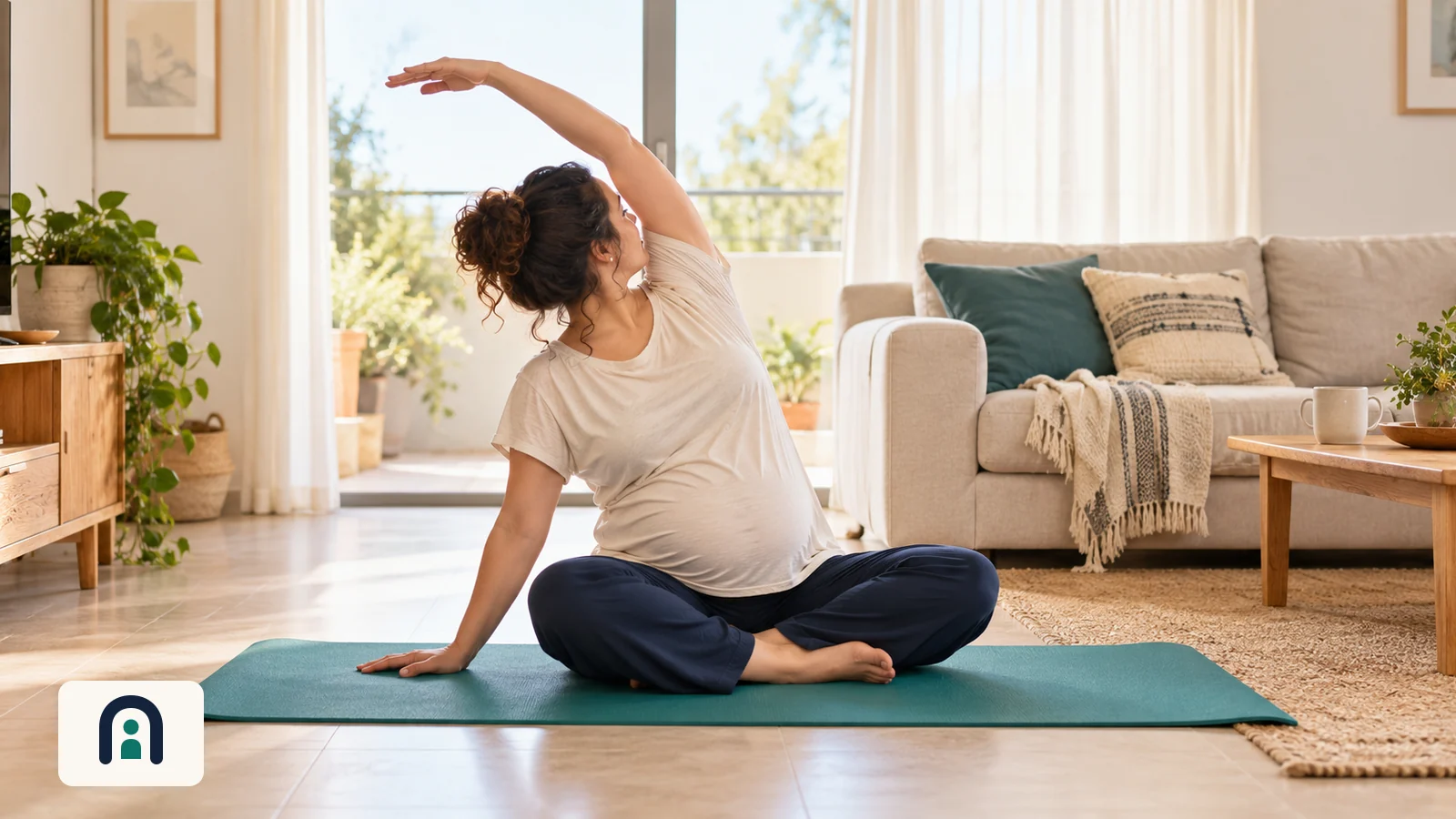
In an uncomplicated pregnancy without medical contraindications, professional guidance considers physical activity safe and desirable. However, no single programme suits every pregnancy, and there is no universal date for returning to exercise after every birth. Adaptation must account for health, previous activity, the course of pregnancy and recovery.
Israel's Ministry of Health presents moderate activity as part of a healthy pregnancy and emphasises precautions. Guidance from ACOG, the American College of Obstetricians and Gynecologists, distinguishes uncomplicated pregnancy from circumstances requiring assessment and adaptation. This is general information, not individual clearance to exercise, a workout programme or a replacement for the team supporting pregnancy and the period after birth.
Assessment begins before choosing a class
Before selecting a setting, discuss the planned activity and pregnancy circumstances with your healthcare team. Raise medical conditions, symptoms, complications and existing instructions in particular. A promise that a class is designed for pregnancy does not establish that it suits every participant or stage.
Describe your previous activity routine. Someone active before pregnancy does not necessarily start from the same point as someone previously inactive. General guidance recognises that background matters, but does not itself determine what an individual should continue or at which intensity.
Ask about specific monitoring instructions and whether these need updating later. An adaptation made at one stage does not remove the need for discussion when something changes. Activity belongs within the changing circumstances of pregnancy, rather than a plan agreed once and followed without reviewing how you feel or the advice given.
What the general target means and why it is not a prescription
The Ministry of Health recommends pregnancy activity involving large muscle groups, such as walking or swimming, totalling at least 150 minutes during the week. This general recommendation must be adapted individually. It should not be presented as a duty to finish activity despite difficulty or an instruction to start immediately at the full volume.
ACOG emphasises that activity is desirable without complications or contraindications, while assessment and adaptation remain necessary. Activity type, duration and intensity are not determined by minutes alone. Previously inactive people should discuss how to begin gradually in a suitable setting.
Pregnancy activity need not all resemble a commercial workout. Nevertheless, everyday movement is not always equivalent to activity selected for a particular target. If application is unclear, request a practical explanation from the healthcare team and instructor. You can also read the guide to adult activity recommendations, keeping general guidance distinct from pregnancy adaptation.
Choose a setting with instruction and clear boundaries
Ask an instructor about pregnancy-related qualifications and how medical instructions are incorporated. Establish how introductory assessment works, what happens with difficulty and who decides on changes. Experience with pregnancies does not replace an explanation of service limits and working methods.
In groups, ask whether individual reporting and task adaptation are possible. Online groups also require questions about what the instructor can see and how feedback is given. An open camera does not guarantee equal supervision of every participant, or suitability for a medical situation that has not been disclosed.
The guide to choosing a personal trainer helps structure introductory questions. Even with relevant training, a trainer does not replace the medical team or override its instructions. If advice conflicts, clarify it with a qualified professional before proceeding on an assumption.
The environment matters as much as the activity's name
Ministry of Health pregnancy guidance includes caution around activities involving falls, impacts or unsuitable conditions. Consider heat, access to drinking water and a setting where activity can be changed or stopped. This is not a personalised list of permitted and prohibited activities for every pregnancy.
In Israel, even a seemingly convenient hour does not guarantee appropriate heat conditions. Previous ability to exercise in summer does not establish suitability now. The guide to exercising in heat explains general planning principles, while pregnancy adaptation requires advice relevant to your circumstances.
Before a new class, establish whether you can leave, sit or stop without feeling obliged to finish. Ask whom to tell about difficulty. Service arrangements that prevent clear communication do not become suitable because the activity is labelled gentle or pregnancy-adapted.
Signs requiring a stop and medical assessment
The Ministry of Health page and ACOG guidance list warning signs for stopping activity and seeking assessment, including bleeding, dizziness, chest pain, abdominal pain or painful contractions, among other symptoms. Do not continue simply to finish the class when an unusual sign appears. This list is incomplete and is not a self-diagnosis tool.
Seek medical assessment appropriate to the situation and urgent help in an emergency. Do not wait for a trainer or messaging group instead of contacting an appropriate medical service. Even if a sign is absent from an example you read, a concerning change deserves discussion with your healthcare team.
The instructor should know beforehand what happens if activity must stop. This can be checked before registration rather than decided during difficulty. An instructor can stop the session and direct you towards help; they cannot establish that a pregnancy is progressing normally from impressions during a workout.
After birth, recovery comes before a programme timetable
Returning to activity depends on the type of birth, any complications and recovery. ACOG describes a gradual return when medically safe. There is no basis for one date on which everyone who has given birth can resume identical activity or intensity. Suitability may also differ between activities.
Pain, unusual bleeding, heaviness, leakage or other difficulties warrant appropriate professional assessment. Do not assume harder training will solve the problem or that every difficulty must simply be accepted. This article does not determine the treatment or exercises required in an individual situation.
The Ministry of Health provides separate information about the pelvic floor after birth. It can introduce the subject and suggest questions, but does not replace individual assessment when symptoms are present. If treatment or rehabilitation is offered, check the provider's qualifications and scope of practice, not merely the package name.
Organise your return around the new reality
After birth, time, sleep, feeding and available help affect what you can sustain. Explain those constraints to the professional and ask how the approach can be adapted. There is no need to compare your timetable with someone else's programme or an online photograph.
For home or video training, ask how interruptions and the exercise space are handled. A baby in the room, equipment on the floor or difficulty finding uninterrupted time are details to plan around. Instruction should explain what fits the agreed arrangement rather than leave you improvising another programme.
Set goals that can be discussed in terms of function and how you feel, with professional adaptation. Returning to activity need not become a race to recover a previous appearance. Post-birth bodily change is not a commercial deadline, and rapid-change promises cannot replace recovery and appropriate follow-up.
What to prepare for discussion with your team and instructor
Gather information about previous activity, your current situation and instructions already given. Ask what is relevant to the session you are considering, which changes require further contact and how the professionals coordinate. You need not leave with a year-long programme; aim to understand the next step and its limits.
Read the Ministry of Health's pregnancy activity guidance (opens in a new tab) for the original information. Individual decisions belong with qualified professionals familiar with your circumstances. Accessible information is not individual clearance, nor a reason to avoid questions when something is unclear.
Before a trial session, communicate relevant instructions and ask how needs will be assessed before exercise starts. Do not ask only whether the class generally suits pregnancy. Establish whether it allows adaptation to your circumstances and how decisions are made if information is insufficient to proceed.
The arrangement can be reconsidered along the way. A change in pace, format or timing is neither failure nor evidence that activity is pointless. It may form part of adapting to changing medical and practical circumstances. What matters is that changes are understood and coordinated, and do not replace professional assessment when needed.
If medical documents need to be shared with an instructor or provider, ask what information is necessary and through which channel. You need not publish pregnancy or birth details in a general enquiry form. Start with qualifications, services and session terms, then provide necessary personal information later through an agreed, appropriate setting.
General information cannot replace diagnosis, medical advice or individual fitness and nutrition guidance. Consult a qualified professional for medical conditions or symptoms.
Further reading

Exercising in an Israeli summer: heat stress, drinking and knowing when to stop
Plan exercise around heat and humidity, access to water and cooling, personal health instructions and warning signs that require stopping.

Exercise after 60: strength, balance and choosing the right setting
Choose activity and professional support after sixty, understand guidance for people aged 65 and over, and check what fits your abilities and routine.
Physical activity recommendations for adults: aerobic exercise, strength and a workable routine
Understand Ministry of Health and WHO weekly activity targets, the role of strength training and how general guidance differs from a personal programme.